Digital Cameras: The Top 10 Things You Need to Know
Last updated on 03/02/2011
This piece was first published way back in 2005. Looking over it recently, we were surprised at just how relevant it still is, despite all the advances in digital photography over the past six years. One or two of the points are outdated now, but it feels almost blasphemous to alter it, so we're leaving it in its un-edited glory. -- Ed. Written
By Rich Knapp
1) Resolution is less important than you think
There is a popular misconception that more megapixels lead to better pictures. This is not the case.
Sure, higher resolution gives you the ability to crop more aggressively or print large pictures, but only a fraction of digital photographers will benefit from this ability. If you're a casual shooter who won't be printing pictures larger than 8x10" or doing extensive computer editing, then a camera with 5- or 6-megapixel resolution will be sufficient.
More advanced photographers will likely appreciate the flexibility of higher resolution, but a 10+ megapixel camera is by no means necessary to create stunning pictures. Choose a camera you can understand and afford, and don't be fooled by glitzy high-resolution specs.
2) Zoom is more important than you think
Whether you're shooting distant wildlife or close-up portraits, you can never have too much zoom. The majority of digital cameras have 3-, or 4x optical zoom, but you will never regret choosing a model with more telephoto power.
Fortunately the extended zoom camera category is growing rapidly, and there is a great selection of models with 8-, 10-, or even 12x optical zoom. For the ultimate in zoom control and quality, look for an extended-zoom camera with image stabilization, which will ensure that shots taken at full telephoto will be tack-sharp, even without a tripod.
3) Travelers should use cameras with AA Batteries
Digital cameras come in two varieties: those that use AA-size batteries and those that are powered by proprietary lithium-ion batteries. If you are a traveler, particularly someone who enjoys remote or rustic locations, choose a camera with AA batteries.
When a camera that uses proprietary batteries runs out of power, you have no choice but to plug the battery into a power outlet to recharge it. This requires an available outlet, a battery charger, and, if you're in a foreign country, a power converter. If access to an outlet is ever in doubt, or if you don't want the hassle of carrying cords and chargers, then the limitations of this system are obvious.
When a camera that uses AA-size batteries runs out of power on a trip, you can simply throw out the old batteries and drop in a new set of high-performance AAs like the Energizer E2 Lithium line. Two or three sets of such batteries can usually take you through a 10-day trip. If you're out of high-performance batteries, you also have the option of using standard alkaline batteries, which are available anywhere in the world, and make a cheap and convenient source of backup power (though they only offer a fraction of the life of high performance batteries).
Recent trips to Asia and Africa have borne this theory out—after my companions' cameras had been sidelined by dead batteries, I was still happily shooting away with my AA-powered Canon PowerShot.
4) Small cameras get shots that big cameras don't
Sure, that big, black SLR with the long lens may look fancy, but it won't do you any good if you're not carrying it. Never underestimate the importance of having a camera that is small enough to fit into your pocket—you'll be amazed at the spontaneous pictures you'll have the opportunity to take. While the photo quality produced by an ultra-compact does not equal that of a large SLR, the ability to whip it out and snap a shot while others are fumbling for their bulky cameras more than outweighs this drawback.
5) Canon makes great cameras
Canon digital cameras receive consistently great reviews, and for good reason: Over the last 2+ years, Canon has time and again proven itself capable of producing well-designed cameras that produce impressive results. From the EOS line of digital SLRs to the diminutive PowerShot ELPHs, Canon invests substantial time in the design process, and the results pay off—photographers of all abilities rave about their Canon cameras.
There have been some mistakes along the way—the Canon A70 was built with a design flaw that produces crippling error messages and black lines on the LCD, but newer models seem to be free of this problem. If you're looking for a great combination of features, price, and performance, Canon will almost always deliver. (NOTE: Digital Camera HQ is in no way affiliated with Canon, nor do we derive any benefit from recommending one brand over another).
6) Kodak makes great, easy-to-use cameras
When I bought my mother her first digital camera, I chose a Kodak, having read countless reviews that raved about their user-friendly controls. The reviews were right—Kodak's EasyShare digital cameras are remarkably easy to use: the menus are simple, the LCD text large and clear, and the controls largely self-explanatory. The results are just as impressive, with attractive, saturated colors and crisp definition. Don't be fooled into thinking that Kodak digital cameras are just for beginners, however—their simplicity aside, many of the high-end EasyShare models offer a full suite of manual controls for ambitious photographers.
7) Digital cameras can and will break
Whether it's due to accidental damage or simple wear and tear, digital cameras are not as durable as their film counterparts. Many photographers have film cameras that are ten or twenty years old—don't expect this kind of longevity from your new digital toy. Some cameras suffer from design flaws (like black lines on the LCD screen of the Canon A70), while others fall victim to the kind of mechanical breakdowns that effect every kind of electronic gear.
Does this mean that you shouldn't buy a digital camera? Absolutely not. A digital camera will so fundamentally change the way you think about photography that you will wonder how you ever got along without one. You must, however, be comfortable with the fact that one day your camera will cease to work.
For some, this knowledge may keep them from spending top dollar on a fancy camera; others simply accept it as the sole downside of working with digital. The most important thing is to do your homework before you buy—any fundamental design flaws will be quickly apparent in user reviews.
8) Don't put all your pictures on one card
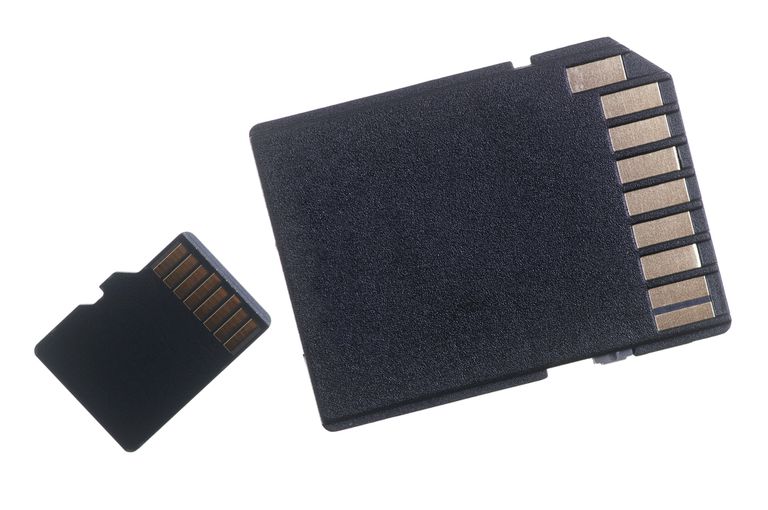
After returning from a trip to Asia, I eagerly inserted one of my memory cards into a card reader to download my new pictures. For still unexplained reasons (likely a static electricity discharge), a card that should have held over 200 pictures was suddenly rendered blank. Two weeks and $250 later (thanks to www.drivesavers.com), I had recovered about 90% of my pictures, but the rest were lost permanently.
The moral of the story? Like any other technology, flash memory is not flawless. It is very rare to lose images, but it does happen, and the fact that I had spread my pictures between 5 memory cards protected me from the possibility of losing two weeks' worth of irreplaceable vacation memories. Given the choice between choosing a single 1GB memory card, or four 256MB cards, I will always choose multiple cards.
9) Find & use a simple photo editing program
Most digital photographers will never take the time to master expensive and powerful photo editing programs like Adobe Photoshop or Jasc Paint Shop Pro—these programs are too complex and time-consuming for all but the most dedicated photographers. Fortunately there are a variety of easy-to-use editing programs that even novice photographers can use to edit, improve, and organize their digital photos.
My favorite program is Picasa, and it is absolutely free at www.picasa.com. With Picasa you can perform all the basic editing tasks like sharpening, contrast correction, cropping, and straightening—most with just the touch of a button. Spend a few minutes on your best photographs and you will be amazed at the results. Picasa also make it incredibly easy to organize your best shots so you don't have to sift through hundreds of unwanted pictures to find your prizewinners.
10) Print and display your pictures
Far too many people take great digital images, only to have them languish in obscurity on their hard drive, never to be enjoyed by others. Don't let this happen to you.
Online image hosting and printing companies like Snapfish or Kodak Gallery can turn your digital images into high-quality prints of any size. You can simply upload your pictures onto the website. From there you can order prints of every size as well as photo mouse pads, calendars, t-shirts and other gifts. You can also send a link to friends so that they can view your pictures online and order their own copies.
If you want to see more of your own pictures, nothing beats using them as a screen saver on your computer. Simply right-click on your desktop, choose Properties/Screen Saver/Settings, and you can direct your computer to the pictures you wish to use. Set the screensaver to change images every 10 seconds and you'll have an instant slide show every time your computer is idle.
Digital Cameras: The Top 10 Things You Need to Know Comments & Questions (write your own!)
before I send it off to the manufacturer?
Kind regards.
my budget range is between $200 to $250.
thanks
They suggested I find the cheapest possible AAs at the dollar store and try those. I've tried several combinations from a dollar for a pack of four no-brands up to Energizer Lithiums that USED to work. NO DEAL!
This camera is only six years old. My last Pentax (K-1000 film) lasted 30 years before it was stolen. When I pay over $500 for something, I expect it to last longer than five years.
Where do I find AA batteries that actually still put out 1.5 volts and nothing higher? Does anyone sell batteries that work in "older" (six years?!?) cameras? I cannot afford a brand new camera. This has got to work for me for at least another five years.
I'm looking for an affordable camera that i can manually change the iso and shutter speed. Any suggestions?"
Will, the Canon PowerShot S95 is a great choice. It was recently replaced by the S100 as Canon's top "Point & Shoot" digital camera, however it continues to be an excellent option if you want manual control. It is still available and selling for at least $100 less than the S100.
Reviews:
dpreview.com/news/2010/8/19... S95:
amazon.com/Canon-PowerShot-... S100:
amazon.com/Canon-PowerShot-...
<a href="computervalley.ca/">... store</a>
Could not controlled my anger,just thrown the camera to a wall,finish the camera.not to pay 1200 riyal for service.again i bought power shot sx 20is for big zoom.one year no problem yet.but 12 mega pixcell camera photo quality looks like less then 3 mega pixcell.again i got to mad for canon g12.only five months used.last week while shooing suddenly lense stop.lense not retracting.message on lcd. Lense error,camera will shutdown automatically,re strat camera.i did my best,nothing happen.ten times i push back the lense.lense retracted.but after shot no picture recorded.only black lcd.finally lense totally not retracted.i try to move the lense clockwise,front panel of the lense comes in my hand.all those cameras was expensive .photography was my hobby since 1986.now i am afraid to by digital still cameras.ie have to go back again for film camera.which could use more then ten years.
Learn some sensitivity.
As for your comments, Saudi person, perhaps the heat in Jeddah (especially in the summer) has to do with the cameras having trouble? I'm just taking a guess. I don't remember if Jeddah is humid (wet air but no rain) or not, but cameras generally speaking will have a higher chance of dying in extreme humidity and heat. The same goes for extreme cold.
I am sorry to see you have had so much trouble, and maybe you have just had some bad luck. Normally speaking Canon is a very reliable brand and they make excellent cameras. Perhaps what you may want is a weather resistant camera.
All of the major companies make them but I remember seeing Panasonic, Pentax, Olympus, and if want to try them one more time - Canon. I hope regular cameras work for you, but maybe those will suit you a little better. Good luck and I hope you find the perfect camera for your needs.
Canon is good but I (and many of the photographers I know) had a better track record with Nikon, Sony, and Pentax...
Larry - lcc444@yahoo.com
The Fuji HS20EXR is a better superzoom camera, but you might be better off just getting a low-end dSLR -- the image quality is much, much better, and from your experience with the Fuji, you've learned a thing or two about hands-on control.
Strictly in the realm of compact cameras, it's tough to find a spec that shows how well a camera will capture depth -- a higher price usually helps. Aside from that, look for cameras with large maximum apertures. A typical compact has a max aperture of f/2.8 -- the best have apertures of f/1.8 (lower numbers are better) but price tags closer to $400-500. The Canon ELPH 500 and Nikon P300 are good compromises -- bright f/2.0 lenses, prices closer to $300.
Thanks
powerchargerbattery.com/dig...
I have an 8-year old Canon Powershot G3 4.0 MP which is a hand-me-down from my cousin. The thing is as big and heavy as a brick but I'm not willing to part with it until I'm able to afford a new G series. The quality of the photos it takes outperforms any recently-purchased compact digital camera that my friends use (we can only afford cheap camera, and in my case, it was for free). I also get decent 5x7 prints from it.
I have been on a steep learning curve on and off the past few months as the more I learn and understand, the more I feel I have to learn. I don't necessarily want video but it seems this has to be included with most of what's available. I originally came to this site to see whether the lens was more important than the body. How important is Depth of Field, what kind of DOF should I be looking at, whether there is a camera with low ISO capability (50-100) or would I use and need much higher ISOs? I want to invest in a camera that takes very true copies of my work without parallax and barrel problems. I would want this camera to be dedicated to this purpose and fixed to a tripod or copy stand. I have a copy stand bought from jessop's several years ago which is good for small - medium works. I also have the Epson Perfection V750 Pro scanner which I can use to scan small works along with scan n' stitch software if necessary. I really bought this to scan and store my 4x5s digitally. Is it better to buy the camera body and lens separately? What cameras/lens combinations would you recommend. A couple of years ago I researched MF cameras but have decided that bigger sensors and higher MPs available on DSLRs now make it possible for me to do good work with a DSLR (I hope). I have also heard of copy cameras which may be a lot cheaper. Obviously I want to take RAW and TIFF photos, or does RAW cancel out the need for TIFF? I have come to accept that a FF sensor is what I should get, but have read that the higher MP cameras (14-14mps are not necessarily better (something to do with the actual size of each pixel or is it the ratio of pixels to sensor?) What is the ideal No. and Size of pixels for a FF sensor Camera? I am willing to look at older models if it means they could fit the bill with the best quality. Which is why I am wondering which is the best quality lens to get. I have read that I should get a prime lens of 50mm or 60mm. If this is so, which is better please, 50 or 60mm? Of course I am also interested in a wider angle lens as I imagine this would be better for wider paintings (oblong rather than square) to get in as close as possible to the work (fill the viewfinder better) and of course bigger works where distance from the work is limited. Can you guide me towards the best cameras and lenses combos and/or tell me what are the most important things to use in my decision making. Although I am learning about Canon and Nikon for the most part I am trying to keep an open mind. Must the lens be the same make as the camera? I know there are a lot of questions, but even if you could iron out one or two for me I'd be very grateful. I will buy a separate camera for travelling, outdoors and fun as my main camera will be strictly for my business as an artist and kept safely at home and always set up and ready (I will also photograph stages of paintings sometimes). I have found this site very interesting, helpful, honest and unbiased. Thank you.
There's also a possibility that your camera doesn't have audio at all. I don't know since I don't know which camera you have. But in the early days of video on digital stills, some chose to cut out audio when zooming because the lens motors could be picked up by the omni directional microphones.
I have an OLD Canon A630 camera that eats AA alkaline batteries so I switched to Ni-MH rechargeables rated at 2700 mAh. Now I have trouble getting the camera to kill the batteries. I would guess that I get about 5 hours of video time out of the camera. It holds 4 AA's. I assume that a camera that shoots 1280x720 video uses more power = less battery time.
MY BATTERY TEST.
I put my Canon A630 camera in auto shoot, no flash and turned off the display. It took 1200 still pics (maximum resolution) before the batteries died. At that point I was sold.
The trick is to buy the highest battery rating you can, in my case it was 2700 mHa AA's and the other trick is to get the best charger.
THE CHARGER
As I understand it, if a charger has no smarts to it, it MAY NOT fully charge all batteries.
As I understand it, if I have 4 batteries and 3 of them have 20 per cent power left in them, and the fourth one is at 75 percent, if you plug ALL 4 of them into a non-smart charger ... this is what happens ... once the 75 percent battery reaches 100 percent ... all charging stops. The other 3 batteries will be charged to 45 percent. But the charger will indicate the charging is done. You will think that all 4 are fully charged, but only one is. (I assume if all 4 batteries have 20 percent charge left in them then they will all charge to 100 percent).
If you have a non-smart charger you can get around this by plugging in one battery then let it fully charge, then take it out and plug in the second battery until it is fully charged and take it out then plug in the third battery ... you get the idea ... charge only one battery at a time, then they will for sure be fully charged.
SMART CHARGER
A smart charger in essence charges one battery at a time even though all 4 are plugged in at the same time. I have one of these chargers and it is great. It has a separate LED for each battery and I can see which ones are fully charged (green) and which ones are charging (red) and which battery is bad (flashing red).
Once they are fully charged the charger allows a small amount of electricity to trickle through to keep the batteries "topped up". I can leave them in the charger for weeks if I want with no harm to the batteries.
LITHIUM-ION
I saw a lithium-ion (proprietary) battery rating of 1100 mAh for a new Canon point and shoot camera. Right away I knew my Ni-MH batteries would run that camera 2.5 times longer (2700 mAh vs 1100 mAh = about 2.5 times more power.) My AA's will never fit into the camera. My batteries would weight A LOT more tho. And take up A LOT more room too. Personally I would accept more weight and a bigger camera to get 2.5 times more video\pics.
Like I said, the Lithium-Ion was rated at 1100 mHa but the $40 non-Canon battery I could buy from the store was rated at 850 mHa ... EVEN LESS POWER! Although they didn't sell Canon batteries the sales guy guessed it would be about $80. If I pay $150 for the camera today, it means that, after 3 years it will be worth $35. If the Lithium-Ion battery needs replacing 3 years from now, I would throw the camera away instead of buying an $80 battery for it. A $150 camera 3 years from now will be so much better than the current one, it would be silly of me to buy an $80 battery for a 3 year old point and shoot camera 3 years from now.
So much for me and Lithium-Ion.
If I paid $2700 for a camera, it's a different story. An $80 battery would likely be worth buying 3 years from now but I'd still have an old technology obsolete camera.
LIFE CYCLE
If you look up specs on cameras that use Lithium-Ion batteries, some mention that the batteries can be charged up to 300 times. I assume they mean 300 full charge cycles ... from zero power to fully charged cycles.
Again as I understand it, as with any rechargeable battery, as it gets recharged, it holds less and less power. By the 295th full charge cycle you will likely have enough power to take 20 pics ... that's a total guess on my part ... but you get the idea.
I also have a budget of $400 or under. I would want it to last for at least a couple of years. Is there anything you would suggest?
Thanks for your help.
CG
The P100 is nice for sports and nature because it has that long zoom, though if you're looking to spend that much on an extended zoom, I'd point you towards the Panasonic FZ40. Better image quality.
The Fuji F300 should have better image quality than either the Nikon or the Panasonic -- it has a larger sensor -- but the zoom isn't as long. I guess it really depends on how much you think you'll be using the ful capability of the zoom lens.
Thanks!
digitalcamera-hq.com/round_...
it's not a settings, when i shot a new picture, it's okay, but if i view it. it have a white lines, how can i solve this problem?!
please help me it's samsung...
Super zoom (at least 10x optical)
Wide angle (24 or25 mm to over 400)
compact (If possible, under 8/9 ozs)
Newest sensor for low light shots.
Manual controls
Stabilization
I would appreciated any suggestions or reality checks on my expectations,
Also, just a note, if a camera has 24mm wide angle and 10x zoom, the focal length maxes out at 240mm, not over 400.
I need a sturdy camera, $200-300-for shooting maps, old documents, etc., grave sites and markers, and of course, my precious grandchildren. What would you recommend?
Most camera buyers a few years ago measured a camera's worth by the amount of megapixels it had, which is really not the most important spec. Manufacturers increased the megapixel counts without increasing sensor size. It works wonders as a marketing scheme, but does nothing to improve picture quality. Higher MP counts on small chips just leads to more noise -- spotty, white-specked pictures. Resolution is important, but it's not even close to the most important spec.
As for zoom, the author never mentioned digital zoom as a good thing. Never mentioned digital zoom at all, since it really just is cropping. This is one trick that nobody really falls for. But as the author said, you'll never regret a camera with a bigger zoom.
Check out the Panasonic ZS line or the Canon A series in that price point.
As for Amazon, to be fair, they're only the conduit here. Unless you're certain that the return rules weren't spelled out in advance. If they weren't, I'd contact Amazon and lodge a complaint. They listen. You can also get your credit card company involved. A 20% restocking fee is BS.
digitalcamera-hq.com/best
www.uk-power-battery.co.uk
Get the SX130.
but i've bought ixus 120 is (it was cheaper and it did fit into my pocket)
was it a good choice?
plz reply
And zooms on p&s cameras aren't as fast as DSLR lenses especially at the extreme end of the focal length. And the cheaper they are, the slower they can be.
Having said that, for under $200, Panasonic's FH20 has ann 8x optical zoom - if it's a well lit ring and you're in good seats you may be able to use that. I also like Casio's FH100. 10x optical zoom. But the FH100 is pricier than the Panny.
If you just wanted a compact camera, know that you'll never get results that rival those of a DSLR and good lens at lower light levels. Still, look at something like the Panasonic FZ35 for a long zoom range and portability.
thnx
chao!
In any case, take a look at the Canon SD4000. It's compact and probably the best at low-light for its size. It's the baby brother to the S90.
If you could also include tips on the BEST way to use the features on ur camera.... that would be really helpful and would save the effort of reading the manual again and again!!!!
A) They use less battery, because the screen doesn't have to be on all the time.
B) Easier to navigate through menus, because you know that you're pressing the correct button.
C) You can press real buttons while wearing gloves.
D) Pound for pound, they cost less than touch screens.
The only thing I like about touchscreen cameras is that you can touch to focus on a specific object. Otherwise, I think it's an unnecessary feature.
I am not sure if I need to get it cleaned? or just get a new camera?
my Canon has done me well over the years so I would be afraid to try out a different brand of camera.
Me and my friend Rachel have just started a photography business and its been slow and a lot of work and time.I still feel like I dont know a lot about my camera.
Any one have any advice on the best way to learn more about different cameras?
because when I talk with our customers they seem more interested in the types of cameras and how they work. and where to get one that suits them and wont cost too much. and me being a beginner photographer I feel like I have no advice for them.
thank you.
That's where the advise really lies. As it pays to think more system than battery. Beginners can go w an entry level body like the T2I and when ready to upgrade can use the same lenses (but when you go full frame those lenses will suddenly have 40% less focal length, FYI).
If it has no sound for video, what's the point? You can do better.
Stick with recommended batteries and with an "mAh" of at least 2500. Kodak's are very specific about using the recommended battery for optimal performance. Anything less, and you end up with a battery that dies pretty quickly.
Lastly, clean your battery contacts with a pencil eraser. This will provide for better connection to give the camera better performance.
However, unless you're doing some serious post processing on your images with a program like Adobe Lightroom, it's not really that practical and will only serve to take up more room on your SD card. And that translates to less images taken. So, if all you're going to do is capture the kodak moment, don't limit yourself with cameras that shoot in RAW.
As a general advice site, it is, in fact, our place to recommend the brands and endorse the products that we think are the best value for the customer. If something stinks, we call it out. If something's great, we promote it.
For the record, this article was written about 4-5 years ago, even earlier than the date at the top of the article, and for what it's worth, we hardly ever recommend Kodak cameras anymore, as the quality of their products has plummeted. We're chosen to leave the article alone because the other 9 points still stand, and it's pretty impressive how timely this article remains, even now.
If you look around the site, you'll notice that we do a pretty good job of covering all brands (as long as the manufacturers can send us products for review). We even named a Panasonic our choice for the consumer camera for the year.
We make our money when readers click through to the deals at our merchant partners. We make the same small amount of money regardless of which camera they choose to click on. We're very open about this business model. We have no incentive to promote one brand over another, except to preserve our reputation as a site that has the good sense to steer our readers towards products that they'll be happy they spent their money on.
We see dozens and dozens of cameras, and get loads of user feedback about all of them. When we recommend a camera, it's because we've seen consistently great feedback about it, and when possible, tested it for ourselves to confirm that.
So long story short, this is exactly the place for us to endorse certain products. Thanks for reading.
So I am looking for a digital camera to replace my Casios. I feel so much better having read your 10 things. I am not feeling so guilty now about having two Casios that are not working(worn out, right?) and looking for a new camera, since I read that they do wear out. It would cost more to send them in for repair than to buy a new one.
I have been convinced that the Panasonic and Canons are the brands I want, but wow, the number of models make me dizzy! I want a camera that recovers FAST-I don't want to wait to take the next picture, a big zoom, and the ability to freeze action. I like to take pictures of horses going over fences and it seems I can never get the timing right to catch the horse going over the jump. I may snap the picture as he takes off, but the actual photo comes out with him blurry and a stride or two after he has landed. Help! I am more interested in getting what I want than getting the cheapest model. I want to find the model that fits my needs, THEN I will look for the best deal on that model.
Ideally I would like something more compact than an SLR, but not those tiny thin credit card sized ones. I have looked at the Panasonic FH20, the Panasonic ZS-3 and 5, the FZ35, and the Canon SX120, SX210, and SX120IS. I am on the fence about the AA batteries. How easy is it to get the ones made for digital use and longer life, and how much do they cost? The Casio batteries were awesome, I must say I am spoiled! I do not care about the GPS and would never want to sacrifice battery life for that kind of a gimmick.
I would love to know your thoughts...
The Fujifilm S1800 does have this capability, and it's a very reasonably priced model for its feature set. I think its one of the only ones with such a large zoom and relatively robust controls. The only thing I'd watch out for with this model is the build quality -- they had to get the price down somehow, so they built the whole thing out of plastic. If you take care of it, it could serve you well. Hope this helps.
What have worried me about Fuji was that it is not one of the best camera makers like Canon but it is the only one which gives me what I am looking for for a reasonable price...Do u have any other recommendations that would fit my budget and better than fujifilm s1800?
Much appreciated,
Sylvia York
I'd also check out Canon's T2i.
Thank you
Raju Sharma
I like ths suggestion about AA batteries because I do travel. I also am very fond of zoom/macro photography. I'm finding it difficult to find a camera that takes AA, has a viewfinder (for bright light outdoor use), and a super zoom.
I don't want to go back to my 35MM with the 100MM macro lens and film; I like the compact/quick convenience of the digital.
I don't want to spend a fortune and I've read reviews on lots and am currently leaning toward a Nikon Coolpix L110 even though it doesn't have a viewfinder.
HELP
On your other notes: Unfortunately, most cameras don't have viewfinders anymore -- I could probably count the number of new cameras with viewfinders on one hand, and they're usually superzooms. Most don't run on AA batteries anymore either.
Anyhow, the camera that we keep referring people to this year is the Panasonic FH20. No viewfinder, no AA batteries, but great shots, easy to use, big zoom, and not too expensive. Something to consider, hope this helps.
how can i learn more about photography.
But to start, learn about the rule of thirds. en.wikipedia.org/wiki/Rule_...
n i have a option of Sony Cybershot H55 n Sony W370 or any other brand in this range i u can suggest n i have to use this for about 3years so which cam should i go for ?? thanks in advance....
If you want pictures that rule buy ksomething that produces quality for the rest its up to your abilitys behind the camera.
Thanks for the info
( was going to write a whole bunch about this subject but this guy John Dziadecki did a good job) look here: amazon.com/gp/richpub/syltg... Good luck,
Chris Stockwell
Thank you
there is a solution 4 ur samsung camera.
it can be repair of cost upto 35 dollar.
its a simply fault of ur screen integrated chip that u have 2 b change as soon as u can....
so u problem of image hiding can b solve by this!!!!
very happy with the results. I took it when I walked the Pembrokeshire Coastal Path and made some of by best
photos. About 2 years later I bought a Fujifilm Finepix S5700 (7.1MP) anticipating even better results. However,
the photos I produced with the Finepix did not look as sharp or have the colour density of those taken with the
Olympus. So, a few weeks ago I thought, "back to Olympus" and bought an fe 5020 (12MP). Sadly the new
Olympus results were very similar to the Finepix and inferior to the D-545 (which I had by now given to my son).
Is there something very simple that I am getting wrong? Any ideas?
In the meantime, try manually turning down the ISO settings on your Olympus. This lets less light into the sensor, so there should be less noise in the picture. I'm not sure this will help, but its worth a shot.
though still not as good as the old D-545. If I may beg your indulgence a second time? With a budget of about £120 what would be the best digital camera I could get in terms of colour saturation and sharpness (pixel size less important). Many
thanks.
Really great ,and useful tips , thank you very much bro ^,^
i just have one question if you have the time to answer me , i would be thankful .....
i`ve recently decided that i need a digital camera ,but i am really confused ,about which brand shall buy from my first camera ?.
i think i need an easy one to start with so , from which brand do you suggest for me ?
and thank you for your time ,, i appreciate it ,,
^_^
______________
Mathew Farney - <a rel="follow" href="123-reg.co.uk/web-hosting/&... Hosting</a>
Also, having pics posted online (or in the cloud as we call it) gives you a backup option in case that hard drive takes a dump on you.
Thanks
Since, the year warranty was up with Canon and the warranty I purchased with MicroCenter was up I took it to a repair shop and they told me I was better off getting a new camera because it would cost TOO much money to have it fixed.
Now, I am in search of a new camera, but am hesitant on getting a Canon because I'm afraid I might have the same problem. Digital cameras cost too much money for me to have buy one every 2 or 3 yrs. I would think Canon cameras would last longer than that.
Pipil
cheapest laptop batteries on sale
i can solve your problem.i share you for my experience, I have to order them because that is the only company who has stock and cheapest price for <a href="penta.com.au/index.php?main... hafraid before submitting the order. I called them for the stock availability and I was surprised with my first call; There Customer support is very good and very helpful and they helped me to buy that battery.
They guaranteed me it will be ship out by same day. It was happen exactly they said to me. I received mybattery following next day.
I am very happy with their Service.and i advice you can visit this site for cheapest price.